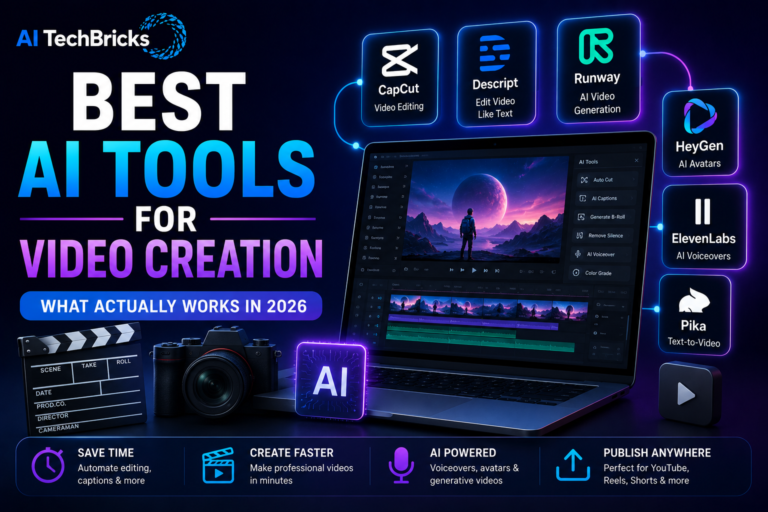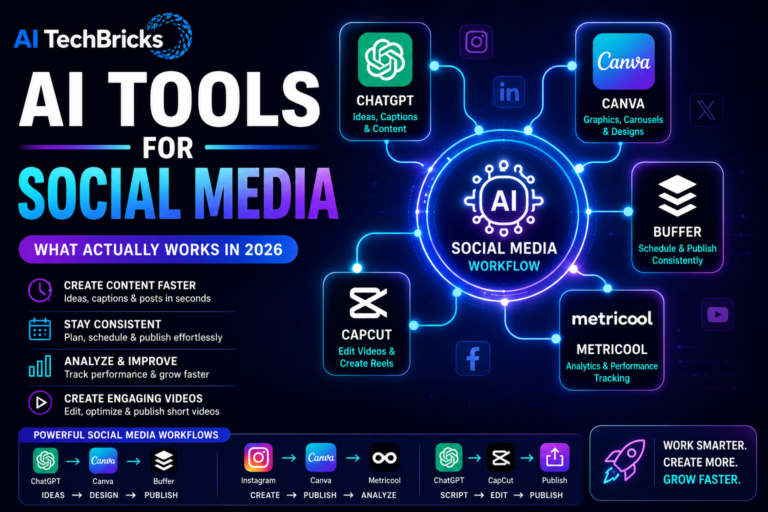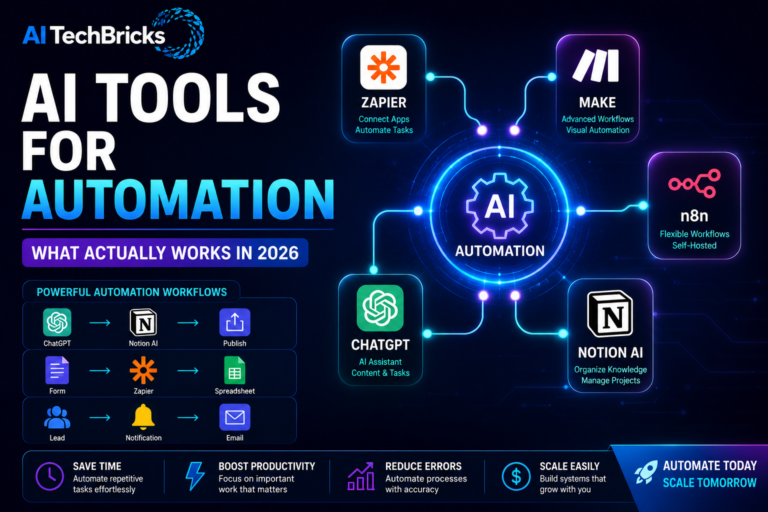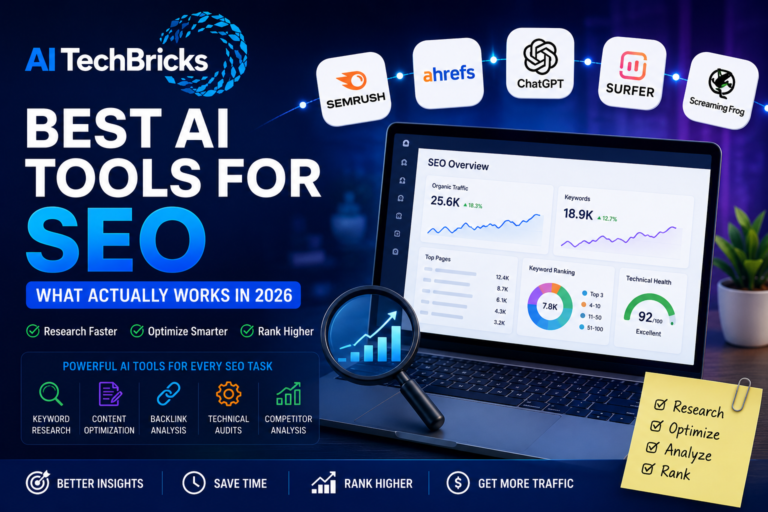
Having 11+ years of experience in Digital Marketing, I can confidently say that 2025 is not the same as before. I will not say AI is changing everything, but most of the manual tasks are easily handled by AI, which has helped me a lot. Let’s see what AI in digital marketing did!
Coming to content-related tasks, it played a major role in helping with campaign briefs, blog outlines, and structuring my rough notes into a clear picture, whatnot. Artificial Intelligence is everywhere.
What I really enjoy about AI is brainstorming my ideas which turned into conversations and getting a out of box ideas. Who would have a 24/7 partner who listens to every silly thought? But we have now.
Everyone are talking how AI can replace marketers, but no. AI cannot replace us but it can help us to grow, to complete tasks in minimal time and be a buddy who brings creativity from us when used in the right way.
But here’s the catch: not every AI tool or trend will truly help. Some add noise while others rewrite the playbook entirely. And as someone who’s spent years watching fads come and go, I’ve learned to spot the difference.
In this guide, I will explain how AI is transforming digital marketing in 2025, 2026 and beyond. Let us see what is the hype, what is real and how we can use it to stay ahead in this SEO game.
Table of Contents
The AI Changes in Digital Marketing: What is Actually Happening?
When I started in digital marketing in 2014, “automation” meant scheduling a few emails and checking if at least we get a few responses, as we didn’t have many tools to know audience. But now, we have a number of tools to think with us and achieve what we want.
According to a 2025 HubSpot survey, over 83% of marketing teams now use AI tools in their daily workflow, from analyzing a campaign data to predicting the customer behavior. That’s not just adoption; that’s dependence.
Marketing Has Changed or evolved from Reactive → Predictive
Stage | What We Used to Do | What AI Does Now |
Data Analysis | Wait for campaign results | Predict outcomes before launch |
Audience Segmentation | Based on demographics | Dynamic segmentation using real-time behavior |
Reporting | Manual dashboards | Automated insights & performance forecasting |
Content Planning | Keyword-based strategy | Predictive topic clusters based on future intent |
AI has quietly merged into every tool marketers rely on — and if you want a clearer view of which tools actually matter today, this AI tools category-wise guide breaks down every essential tool marketers should know.
But let’s bust a myth right here:
“AI is coming for your job.”
No, it is coming to help in your repetitive tasks.
It’s replacing the hours we used to spend pulling reports, cleaning data, or manually optimizing bids. The real winners are the marketers who use that saved time to think more strategically.
From My Experience:
I have seen small businesses jump from 2x to 5x ROI just by integrating AI analytics into their campaigns. Not because they spent more, but because they spent smarter.
AI helps marketers do what we have always wanted: understand customers before they speak.
If you want to understand the bigger shifts driving these changes, my AI trends shaping 2025 and beyond guide covers the real transformations happening across the industry.
AI in Content Creation and SEO
I will be honest with you. If someone had told me in 2015 that AI would write content outlines better than half the junior writers I hired… I had have laughed them out of the meeting room. And here we are
In 2025, AI is not just a “content helper” but a strategic creative partner. It predicts, optimizes, and sometimes even argues back (looking at you, GPT).
While AI offers broad benefits across all channels, its sharpest impact is often seen in search optimization, which is why we’ve compiled a deep dive into the top 10 AI SEO tools to 10x marketing ROI for our readers.
According to Semrush’s 2025 Content Trends Report, 68% of marketers say AI-generated insights improved their organic traffic within six months. And here’s the kicker 47% claim they now rely on AI tools for more than half of their SEO planning
How AI Supercharges SEO Strategy?
SEO Task | Old Way | AI-Powered Way (2025) |
Keyword Research | Based on monthly volume | Predicts future trending keywords |
Topic Clustering | Manual grouping | Automatic semantic clusters using NLP |
Content Optimization | Post-publish tweaks | Real-time SERP alignment during writing |
Competitor Analysis | Manual backlink tracking | AI detects content and link gaps instantly |
What I love most about this AI shift is how it makes content intent-driven, not keyword-stuffed.
Tools now identify why users search and not just what they search for — and if you want to get even more out of these models, the GPT prompt mastery guide shows how to write prompts that give precise, human-like output.
For example, AI models can already predict that “AI content detectors” and “humanized SEO writing” are trending faster than “AI copywriting tools.” And guess what? They are right, search data proves it.
Smarter, Faster, Funnier Content Creation
Let’s talk tools (lightly, because we’re not doing brand worship here).
Platforms like Jasper, Copy.ai, and Frase have evolved from simple content generators into creative copilots that handle:
- Blog topic ideation based on SERP gaps
- Sentiment-optimized social captions
- SEO-driven content briefs
- Style and tone alignment for brand voice
But here’s the secret sauce: AI doesn’t replace creativity, it accelerates it.
And if you create content daily, the GPT prompts for content creators breakdown gives you prompt stacks that automate 80% of your creative workflow.
Real Talk: What’s Actually Working
In one campaign I reviewed earlier this year, a SaaS company used predictive AI to choose blog topics. Instead of writing about “AI in marketing,” they focused on “AI tools for small business growth.”
That single shift boosted their traffic by 212% in three months, simply because they aligned content with search intent before competitors did.
And that’s the whole point:
AI helps you write what your audience will search for not just what they searched last month.
AI in Digital Marketing Stats Recap:
- 68% of marketers report AI-driven SEO improved traffic (Semrush, 2025)
- 47% rely on AI for half or more of SEO tasks
- 3x faster topic ideation cycles using predictive clustering
- 200%+ growth in engagement for intent-aligned content
From my 11 years in marketing:
AI won’t fix bad content but it amplifies a good strategy.
The marketers who win this decade aren’t the ones who write the most. They are the ones who train AI to write the right things.
If you want to see which tools are genuinely helping marketers execute these SEO insights faster, check out the best AI SEO tools for 2025 that will supercharge your organic growth
AI in Advertising and Targeting
I still remember when we created digital ads hoping it hits the reight audience. Testing, testing and testing again to get our targeted audience. And today AI has turned to guesswork into a laser-guided precision.
In advertising, AI is not only about automation, but prediction. It can read intent signals, scrolls, clicks and even dwell time, with this data it learns what drives action before we notice patterns.
Amazing isn’t it?
A 2025 Statista report shows that 72% of advertisers now use AI for audience targeting, up from just 45% in 2022. The reason? AI understands micro-behaviors that traditional targeting missed.
How do AI transform brainstorming?
Aspect | Before AI | After AI (2025) |
Audience Targeting | Based on demographics and cookies | Predictive, behavior-based, privacy-safe intent modeling |
Ad Creation | Manual copywriting and design | AI-driven creatives optimized for engagement |
Bidding | Rule-based, reactive | Smart bidding with real-time context awareness |
ROI Tracking | Delayed attribution | Continuous learning with predictive attribution models |
Real-World Shift
- Predictive Targeting: AI models now identify users most likely to convert before the campaign even starts.
- Creative Optimization: Tools use A/B/C testing (yes, that’s a thing now) to test thousands of ad variations in minutes.
- Privacy-Compliant Targeting: With the cookie apocalypse, AI-driven contextual targeting is replacing third-party data.
From My Experience
After spending a decade optimizing ad funnels, I can say this, the marketers winning in 2025 are the ones who trust AI’s predictive edge but still think human-first. Machines can find patterns, but empathy still closes the deal.
The smartest campaigns I have seen recently aren’t just data-driven, they are emotionally tuned. AI can tell you who to target and when, but you decide why it matters.
AI-Powered Personalization & Customer Experience
Before AI, personalization used to mean by adding our name to an email subject line and calling it a day, and now? AI makes that look like a beautiful painting.
With this new AI tec, the personalization runs on algorithms that know your audience better than the intern.
According to Salesforce’s 2025 State of Marketing report, 84% of customers now expect brands to treat them like individuals and not data points. AI makes that expectation scalable.
Here’s the magic:
- Dynamic content adaptation: The moment a user lands on a site, AI tracks their micro-behaviors like scroll speed, dwell time, even cursor movement and adjusts the content accordingly. Just like we see heatmaps in Microsoft Clarity. Oops! Did I just mention another tool?
- Predictive recommendations: Think Netflix-style, but for eCommerce, SaaS, or even B2B funnels. The system does not just react but it also anticipates.
- Real-time sentiment detection: Ever wondered why Spotify nails your “mood playlist”? That same tech is reshaping email campaigns and landing pages.
I still remember working with a retail client in 2018, back when personalization meant sending a “Happy Birthday” coupon. Fast forward to today, their system predicts what color palette the customer might prefer next season based on browsing behavior. That is AI doing psychic-level marketing and it works.
From my personal experience: The day before Valentines day, we started a Facebook campaign with a red background, having 2 gadgets saying 1+1 offer, and we spent 50K first and we got worth 50K orders, and on the very first day, we reached 100 orders.
As I want to experiment, I have changed the image background to yellow but the content copy was same; we got just 1 or 2 orders. Immediately changed back to the old image with a red background, we reached 100 orders on the second day.
From the beginning, I think as a user and I always put psychology into marketing, and this campaign cleared all my queries, and I had a very good experience with the campaign. It was a success, though.
Now, AI is doing this.
And let’s not ignore how AI-powered CRMs are rewriting customer journeys. Platforms like HubSpot, Braze, and Insider don’t just store data; they continuously learn from it. Every click, scroll, and exit contributes to a live profile that fine-tunes itself in real time.
Here’s a quick breakdown of what’s working in 2025:
AI Personalization Feature | Impact on Engagement | Real-World Example |
Predictive recommendations | +32% conversion lift | Amazon, Sephora |
Adaptive landing pages | -25% bounce rate | Adobe Target |
Real-time behavior scoring | +41% lead quality improvement | HubSpot AI |
Emotion-based messaging | 2.5x retention rate | Spotify, Duolingo |
Interesting fact is that, having all thet each around us the emotional layer still matters most. The best-performing campaigns I have seen combine AI precision with genuine empathy. The system identifies intent; the human crafts the moment.
So, personalization in 2025 is not about automation, it is about anticipation.
AI in Predictive Analytics & Data-Driven Decision Making
In 2020, our marketing was about “knowing audience”, but now we have to know what they will do next.
Predictive analytics is no longer the toughest thing to analyse. With the help of AI models, which crunch historical data, behavioral cues, and even macroeconomic signals to forecast which campaign will hit the jackpot before you have even pressed “publish.”
When I first started digital marketing 11 years ago, we used to run A/B tests for weeks to figure out what worked. Now AI is being done in real time. The algorithms test, learn, and adjust before your morning coffee cools down. Amazing isn’t it?
According to a 2025 Gartner insight, marketers using predictive analytics have seen up to 40% higher ROI on campaigns, mostly because they no longer waste time (or ad spend) guessing.
Here’s how the smarter marketers are using predictive AI right now:
- Campaign Forecasting: AI predicts which creative will perform best in specific demographics.
- Customer Lifetime Value Prediction (CLV): Machine learning models rank which leads will turn into loyal customers.
- Churn Prediction: AI identifies “at-risk” customers before they even think of leaving, triggering automated win-back campaigns.
- Ad Spend Optimization: Real-time data ensures your budget flows where performance is peaking, no more human “gut feel.”
I worked with a SaaS brand last year that integrated AI forecasting into their ad management system. The tool predicted campaign fatigue 48 hours before it actually happened. That two-day head start saved them nearly $27,000 in wasted ad spend in one quarter.
And the magic is not just in automation, it is in precision. The AI doesn’t just analyze what happened. It explains why it happened and what is about to happen next.
Here’s a snapshot of what’s dominating predictive analytics in marketing right now:
Predictive Use Case | Marketing Impact | Example Tool |
Churn prediction | +28% retention rate | Pecan AI |
Ad performance forecasting | 2.3x faster optimization | Madgicx, Pattern89 |
Lead scoring & CLV prediction | +35% sales conversion | Salesforce Einstein |
Predictive audience segmentation | 3x engagement rates | Adobe Sensei |
The best part? We don’t need any team to pull data like this. Platforms like Google Analytics, HubSpot AI, and Zoho Zia now include native predictive dashboards.
AI doesn’t just tell you what to do, it tells you what is worth doing.
AI in Social Media Marketing
Social media marketing in 2025 feels like less shouting into the void and more like precision storytelling, all thanks to Artificial Intelligence.
Today, platforms use machine learning to detect not just what users interact with, but why they interact. And that shift has completely redefined how we plan, create, and measure content.
A recent report by Sprout Social shows that 72% of marketers using AI-driven analytics saw measurable growth in engagement rates, mainly because their campaigns adapted to real-time audience signals.
Here is what that actually looks like in practice:
- Trend Discovery: AI tools analyze millions of social conversations daily to identify emerging trends before they peak.
- Smart Scheduling: Algorithms determine the best time to post for maximum visibility, tailored per audience segment—not just by timezone.
- Audience Segmentation: AI clusters users by behavior and sentiment rather than generic demographics, improving message relevance dramatically.
- Influencer Matching: Machine learning platforms now assess authenticity scores, engagement health, and audience overlap before you invest a dime in influencer collaborations.
In one case study, AI-driven sentiment tracking flagged a sudden drop in brand perception on X (formerly Twitter). The system correlated it with an unrelated trending keyword that coincidentally matched the brand name. We adjusted messaging immediately, and the issue was resolved within hours, not days.
That is the real power of AI in social context awareness. It interprets human emotion at scale, helping you pivot before small issues become costly.
Here’s a quick comparison of how social teams are applying AI today:
Function | Pre-AI Workflow | With AI Tools | Impact |
Trend analysis | Manual keyword monitoring | Predictive social listening | Faster reaction time, early adoption |
Post scheduling | Fixed calendars | Adaptive engagement timing | +26% engagement rate |
Influencer marketing | Manual research | AI-driven influencer discovery | 2x ROI on collaborations |
Sentiment tracking | Reactive PR | Real-time brand health monitoring | Reduced crisis response time by 60% |
Leading tools in this space include Brandwatch, Emplifi, Hootsuite OwlyWriter, and Sprout Social AI, but what truly matters is how well these systems are trained on your audience’s tone and intent.
AI in Advertising and Targeting: Precision Over Guesswork
When I started running digital ad campaigns years ago, most of our targeting relied on broad personas like “working professionals aged 25–40” or “tech enthusiasts.” It worked decently back then. But today, that’s a blunt instrument in a laser-focused world.
AI has flipped advertising from audience segmentation to intent prediction. Instead of assuming who might buy, algorithms learn who will buy, based on real behavioral signals, not demographics.
Take programmatic advertising. A 2024 Statista report showed over 90% of display ad spending now flows through AI-driven platforms. That is because machine learning doesn’t just automate bids; it studies thousands of variables per second like time, device, sentiment, purchase history which help to decide whether a single impression is worth the money.
But here’s what most marketers miss: AI targeting is only as good as your data hygiene. I have seen campaigns lose thousands because CRMs were cluttered or pixel events were not mapped right. The models can’t find your buyers if your data foundation is cracked.
In my experience, the best-performing ad strategies mix first-party data with adaptive AI models. Brands that integrate customer journey analytics with real-time feedback loops see up to 42% better ROAS, according to a 2025 HubSpot benchmark report.
Here’s a snapshot that sums it up:
Approach | Example | Outcome |
Manual Targeting | Based on age, gender, and location | High waste, low relevance |
Lookalike + ML Optimization | Based on user behavior and conversion likelihood | Higher CTR, improved ROI |
Predictive Targeting | Uses AI to anticipate intent before search | Reduced CAC, increased LTV |
The beauty of AI isn’t that it automates advertising. It is that it turns audience data into decision intelligence, something traditional marketers could only dream of.
Conversational Marketing & Chatbots
Today’s conversational AI is not about answering; it’s about engaging.
Tools powered by GPT-4, Claude 3, and Google’s Gemini now understand tone, emotion, and buyer intent. According to Drift’s 2025 Conversational Marketing Report, 82% of customers expect an instant response when contacting a brand, and AI is finally making that scalable.
But here is where I have seen businesses go wrong, they deploy chatbots as replacements for human interaction. That backfires. The real success comes when AI acts as the frontline filter, capturing leads, qualifying prospects, and routing conversations to humans when nuance is needed.
Here’s what an AI-led conversational workflow looks like:
Step | Role of AI | Role of Human |
Initial Engagement | Captures lead, greets user naturally | — |
Qualification | Identifies buyer stage, intent | — |
Escalation | Transfers complex or emotional queries | Provides empathy, closure |
Feedback Loop | Learns from past chats to improve tone | Reviews and fine-tunes replies |
The sweet spot? AI handles speed, humans handle subtlety.
That blend builds trust and saves cost, a combination no marketer should ignore in 2025.
The Ethical Side: Bias, Transparency & The Human Touch
AI may be efficient, but it is not infallible. I have tested multiple AI tools that made biased ad placements or skewed audience profiles not because of malice, but because of data imbalance.
According to a 2025 MIT study, 61% of marketing models still show gender or age bias in ad delivery, especially in industries like finance and hiring. That is a wake-up call for all of us.
Transparency and explainability are no longer optional. Brands now face regulatory pressure (and consumer scrutiny) to show how their AI decisions are made, whether that’s who saw an ad, or why an offer was triggered.
Ethical AI in marketing should be guided by three principles I always emphasize in client strategy sessions:
- Audit your algorithms regularly — Know what your data excludes.
- Stay explainable — If you can’t justify a campaign decision, it’s a red flag.
- Keep a human in the loop — Automation without accountability is a PR risk.
Because here’s the truth: audiences forgive mistakes, not manipulation.
AI can optimize, but humans must oversee. That’s how we keep technology an assistant, not an authority.
The Future: Where AI Marketing Is Heading by 2026 and Beyond
Every January, I try to map where digital marketing is heading. In 2025, the line between “human creativity” and “AI execution” is getting beautifully blurred.
By 2026, we will see five clear transformations:
- Predictive Content Engines – AI will suggest campaigns before trends peak, driven by live cultural signals and search intent forecasts.
- Voice-first Search Marketing – With 60% of Gen Z preferring voice interactions, optimization will move beyond keywords to speech patterns and intent phrasing.
- AI-Powered Video Personalization – Tools like Synthesia 3.0 are already generating thousands of micro-videos with localized tone and product cues.
- Neuro-Marketing & Emotion AI – Ad testing will track facial cues, sentiment, and eye movement to predict emotional resonance.
- Ethical Branding as a USP – Transparency will become a competitive edge. Brands that disclose their AI ethics openly will build stronger consumer trust.
I have said this to every marketing team I mentor:
“AI won’t replace marketers. But marketers who understand AI will replace those who don’t.”
The future belongs to those who balance creativity, data, and ethics. Not just one of them.
Conclusion: From Data-Driven to Decision-Driven
After 11 years in digital marketing, I have seen every “next big thing”, automation, analytics, influencer waves, voice, AR.
But AI is different. It’s not another tool in the box. It is the box now.
AI isn’t here to steal our jobs, it is here to remove the parts we shouldn’t have been doing manually anyway.
The late nights adjusting bids or tagging 300 keywords? Gone.
Now, our time is better spent understanding human behavior, because machines can’t feel emotion, and that is still where marketing wins.
So if you ask me where to start:
Don’t chase every AI tool. Start by training your team’s mindset.
The marketers who ask “Why did this perform better?” — not just “How can I automate it?” are the ones who will thrive in the AI decade.
What has AI changed in your Digital Marketing process? Comment below!
Frequently Asked Questions (FAQs)
1. How exactly is AI changing digital marketing jobs?
It is shifting them but not eliminating them. Routine roles like ad optimization and reporting are being automated, but strategic, creative, and analytical skills are more valuable than ever.
2. What are the best AI tools for digital marketers in 2025?
Top-performing tools by category include Jasper (content), SurferSEO (SEO optimization), ChatGPT (ideation), Synthesia (AI video), and HubSpot AI (CRM insights).
3. Can AI help small businesses compete with large brands?
Absolutely. AI levels the playing field. Small businesses can now automate ad targeting, content generation, and lead nurturing at minimal cost — something that required full teams before.
4. How do I keep my marketing “human” when using AI?
Keep storytelling, humor, and empathy human-led. Use AI for data, not direction. Always review tone and context before publishing anything automated.
5. What’s the biggest risk in relying too much on AI marketing?
Over-automation. If your brand voice starts sounding generic or robotic, you lose trust fast. AI should assist creativity — not replace it.
6. How should marketers prepare for 2026 and beyond?
Focus on skills AI can’t replicate such as strategy, creativity, psychology, and ethics. Learn how AI tools think, not just how to use them.